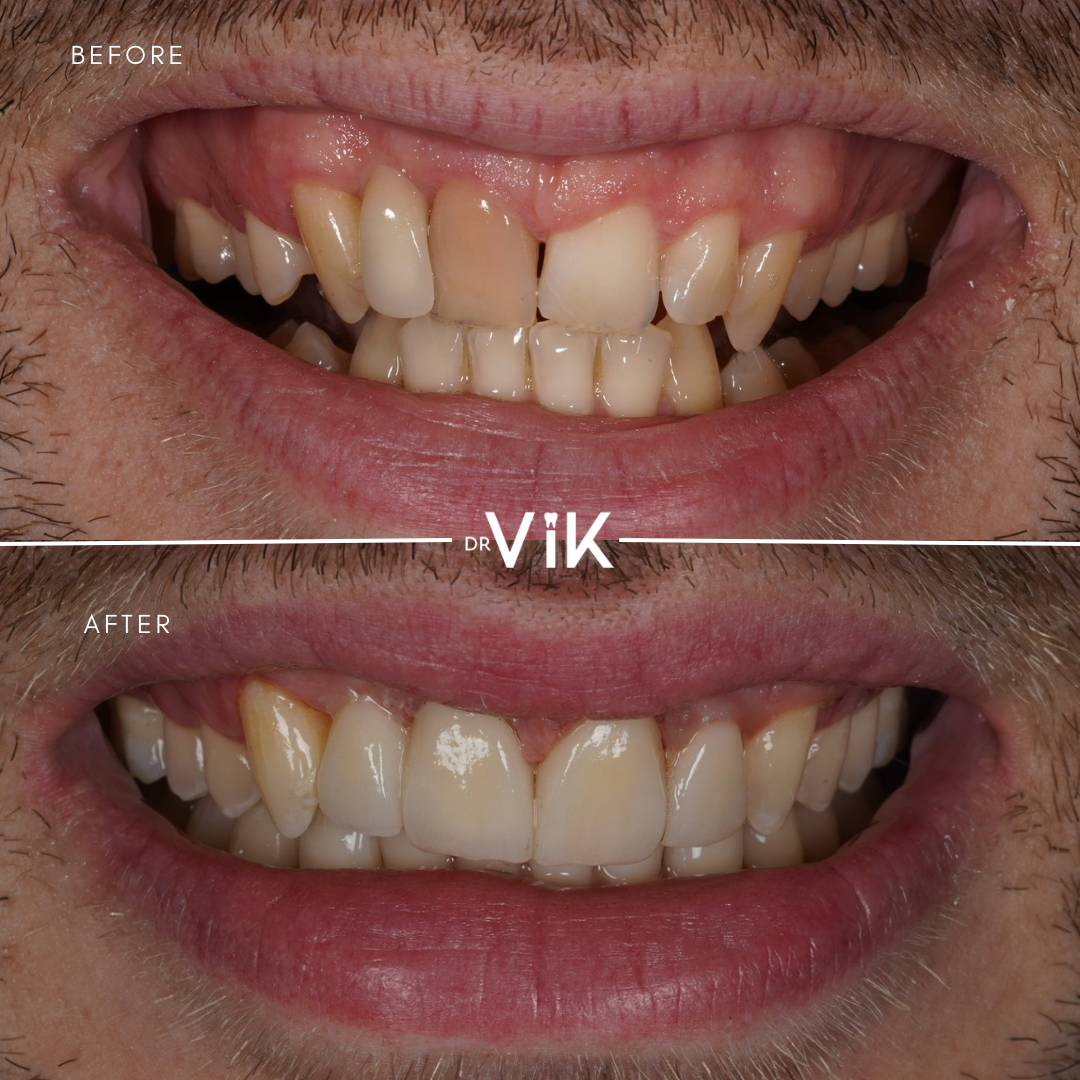
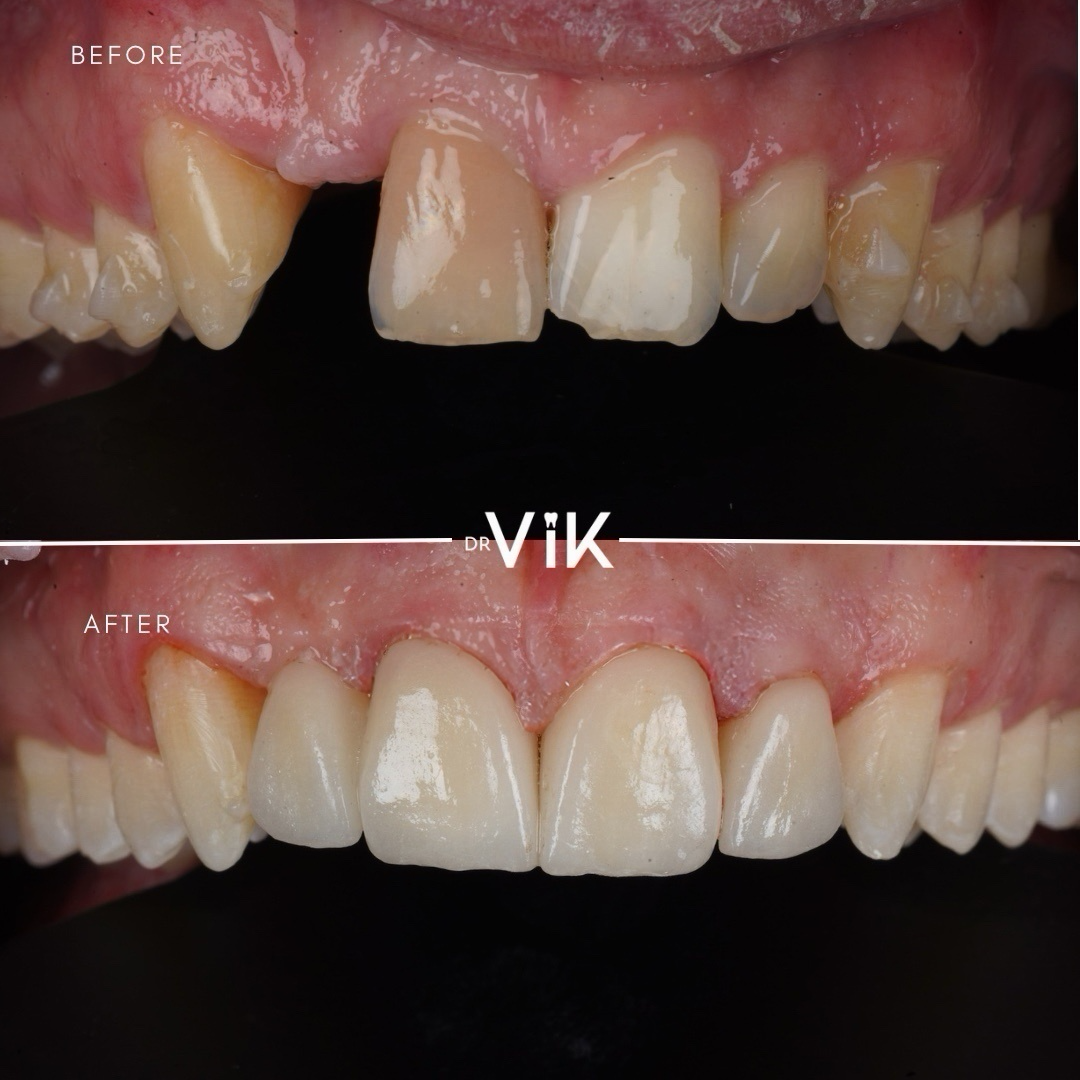
Porcelain Veneers with Dr. Vik
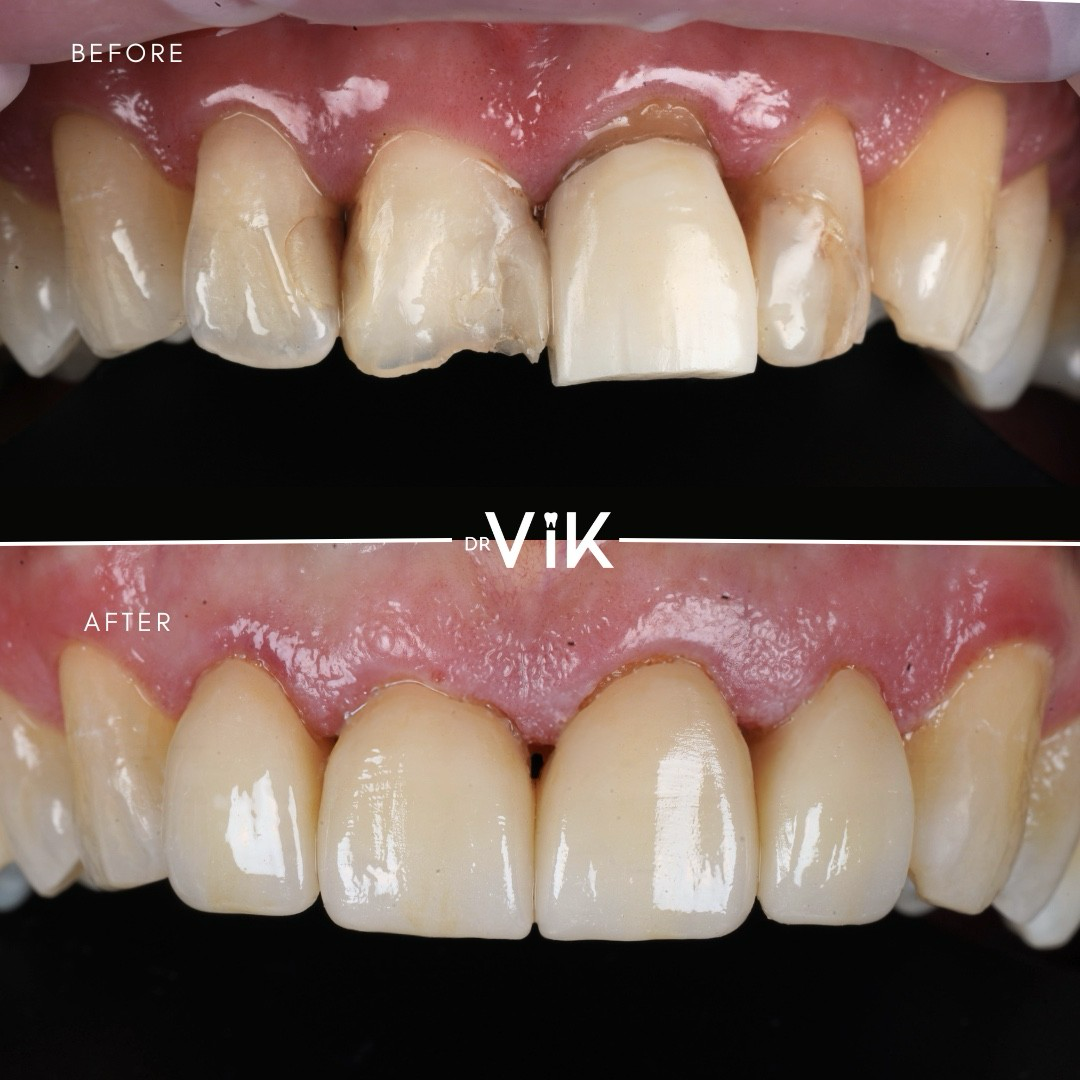
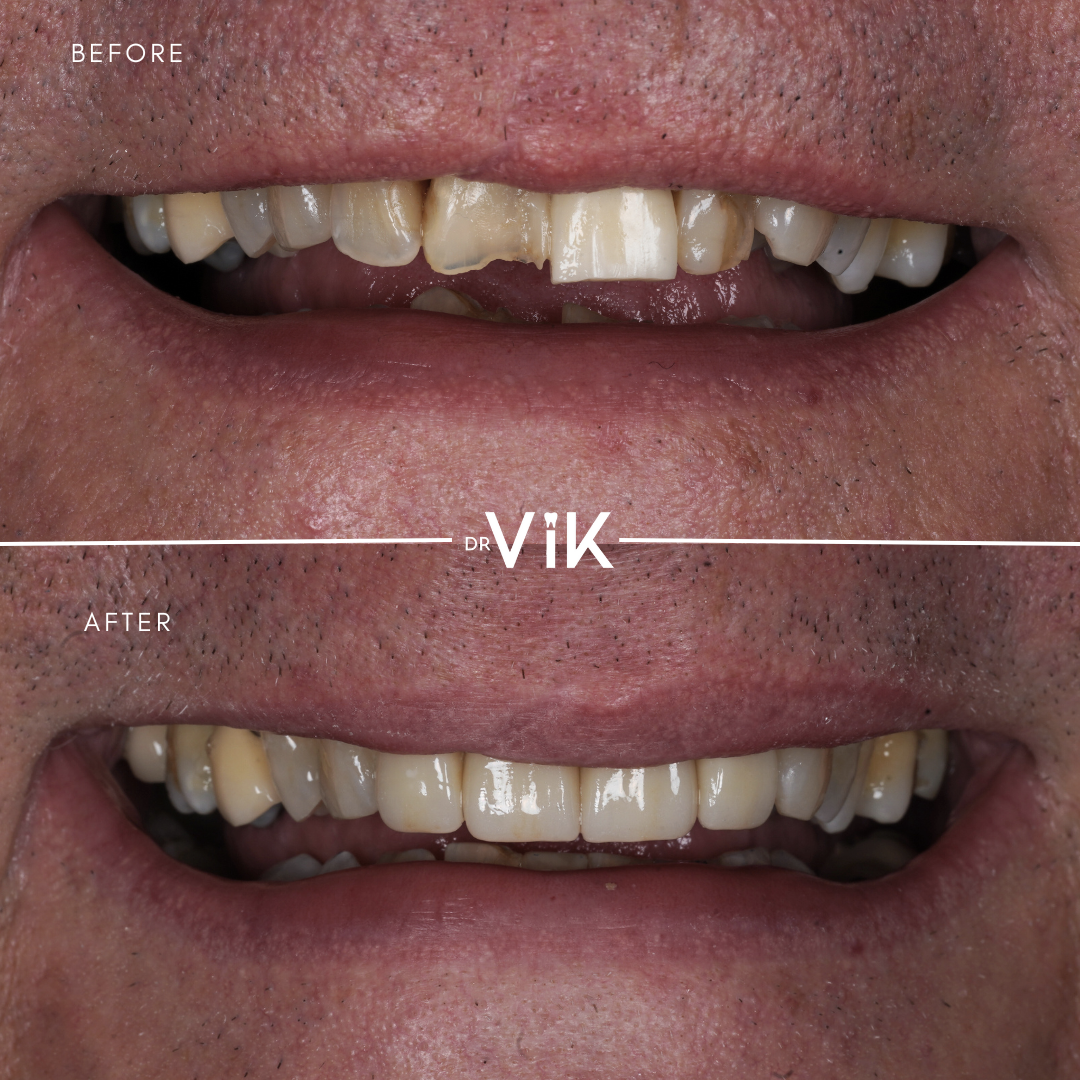
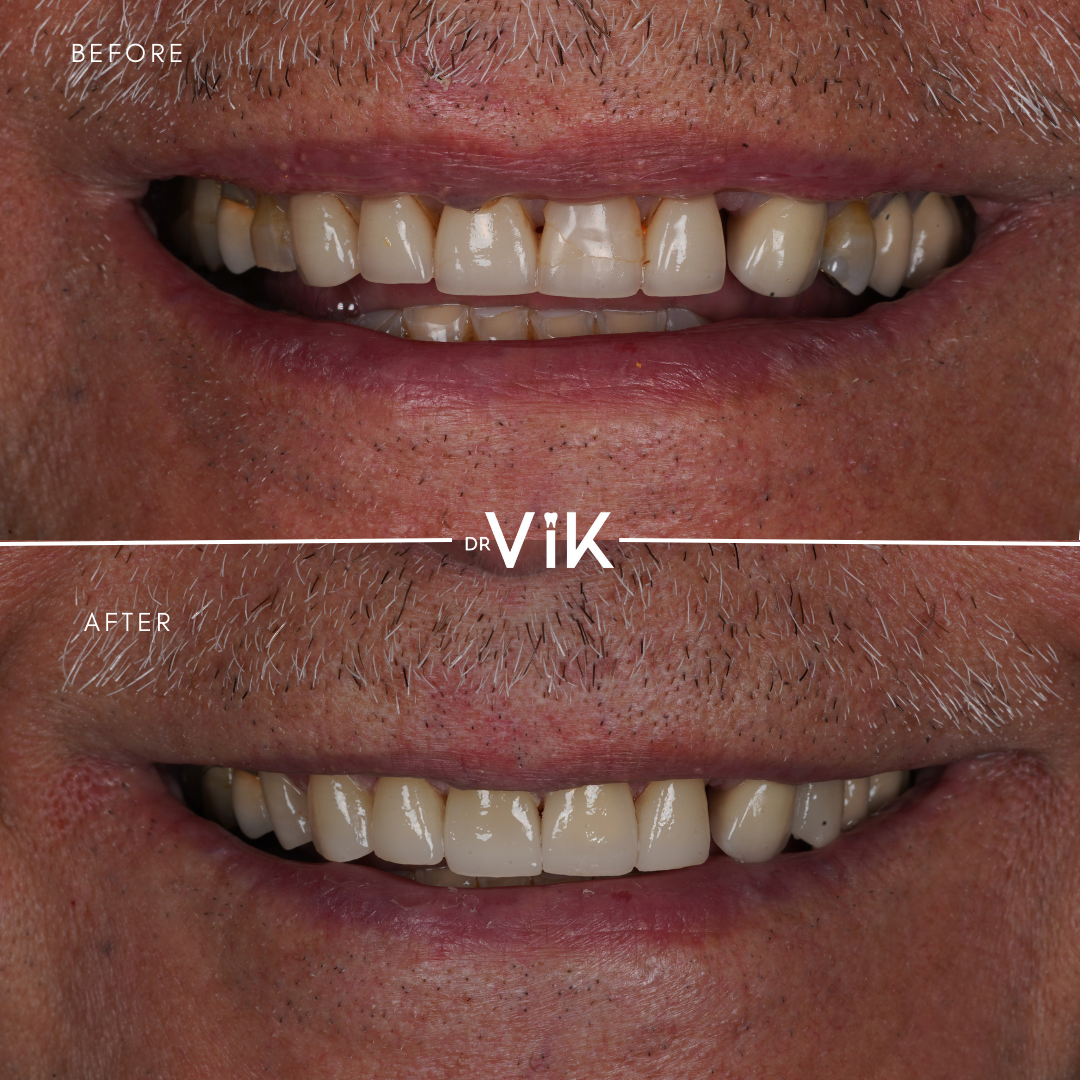
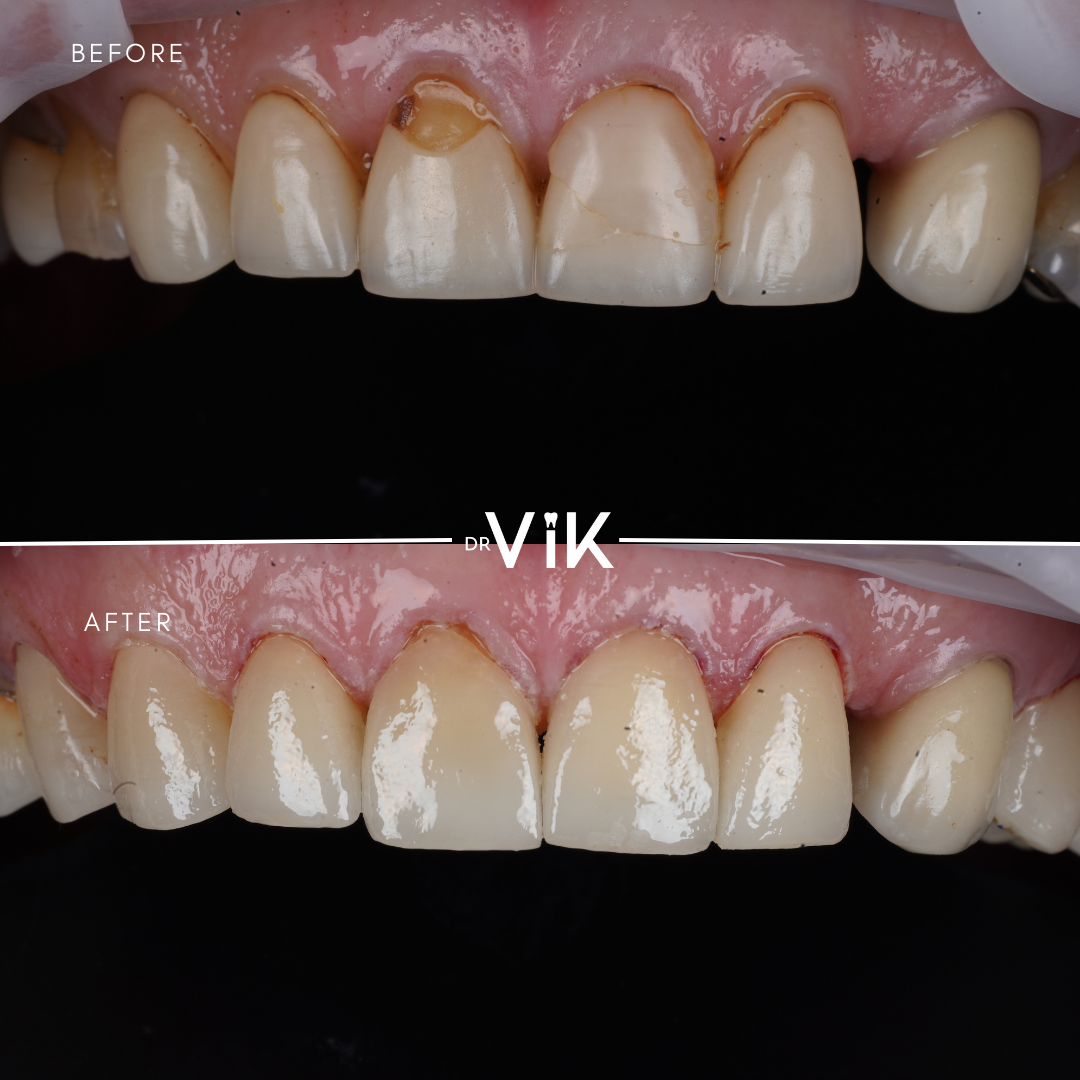
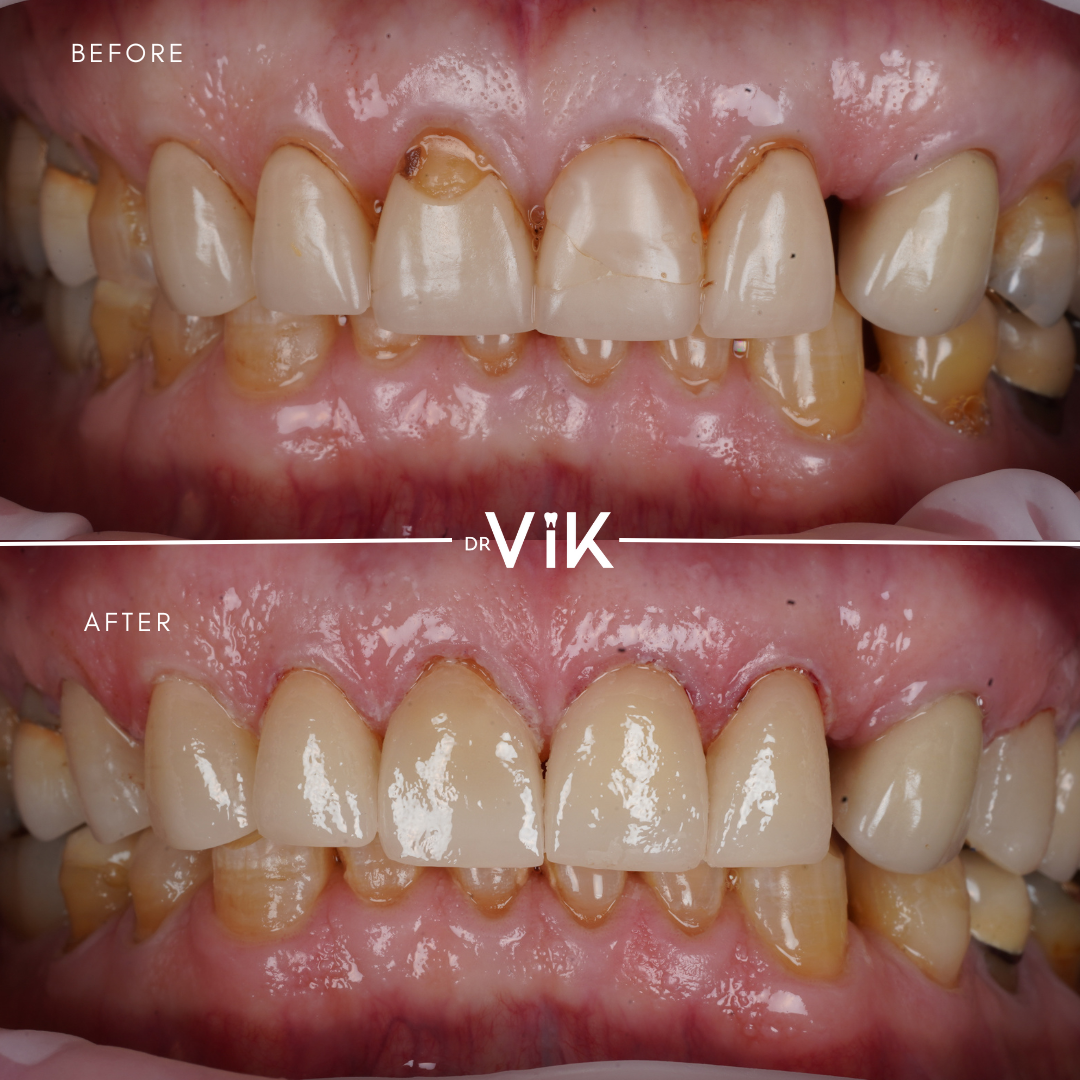
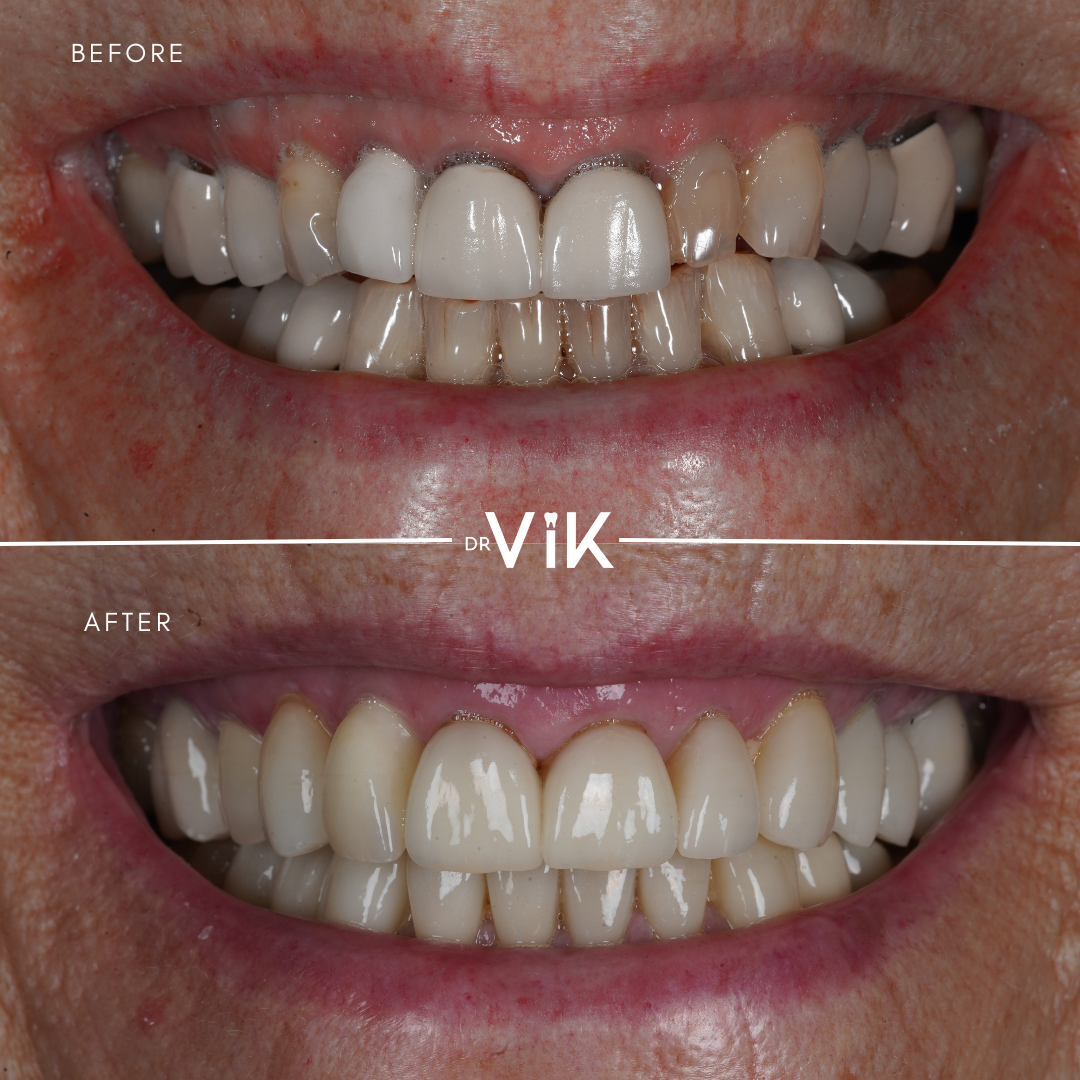
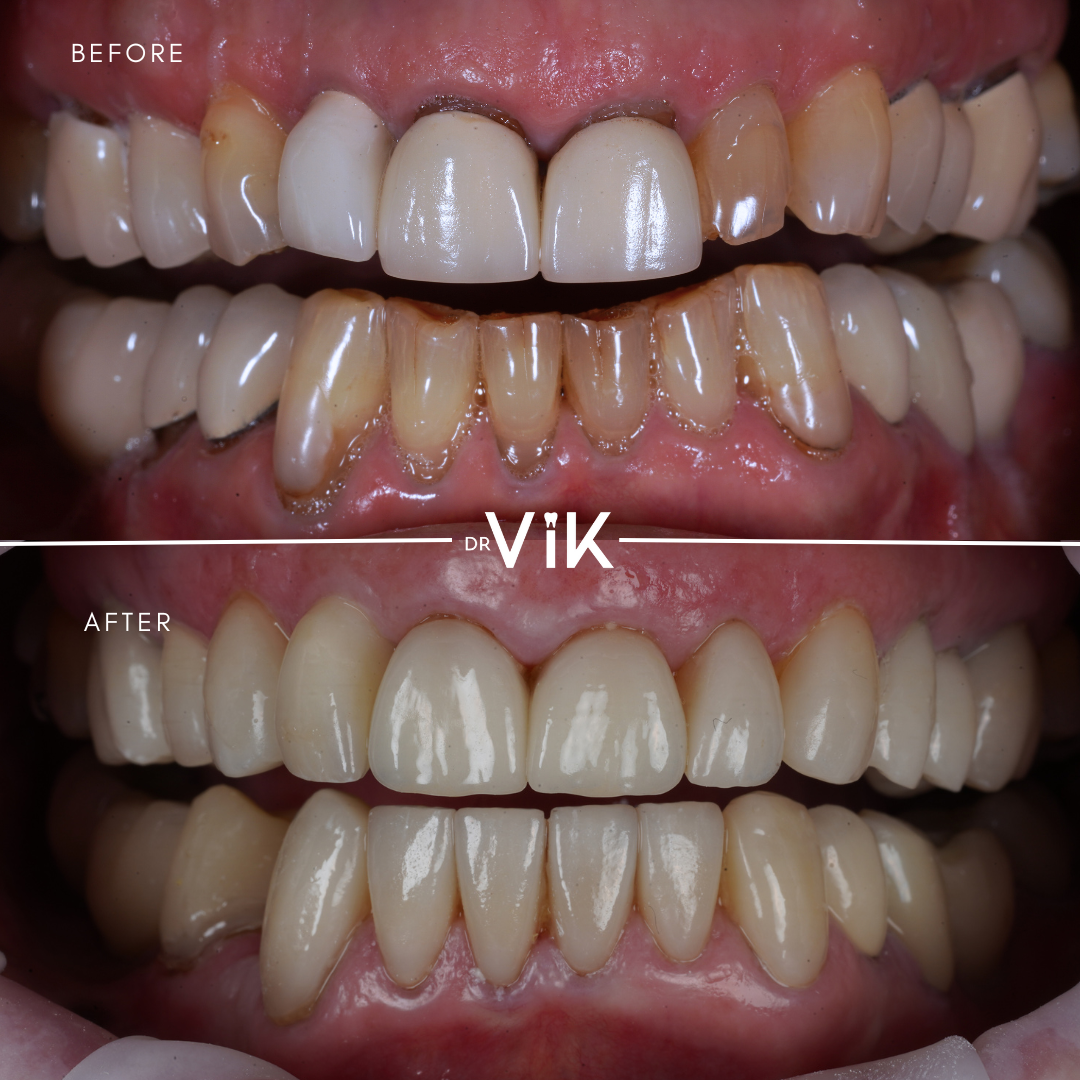
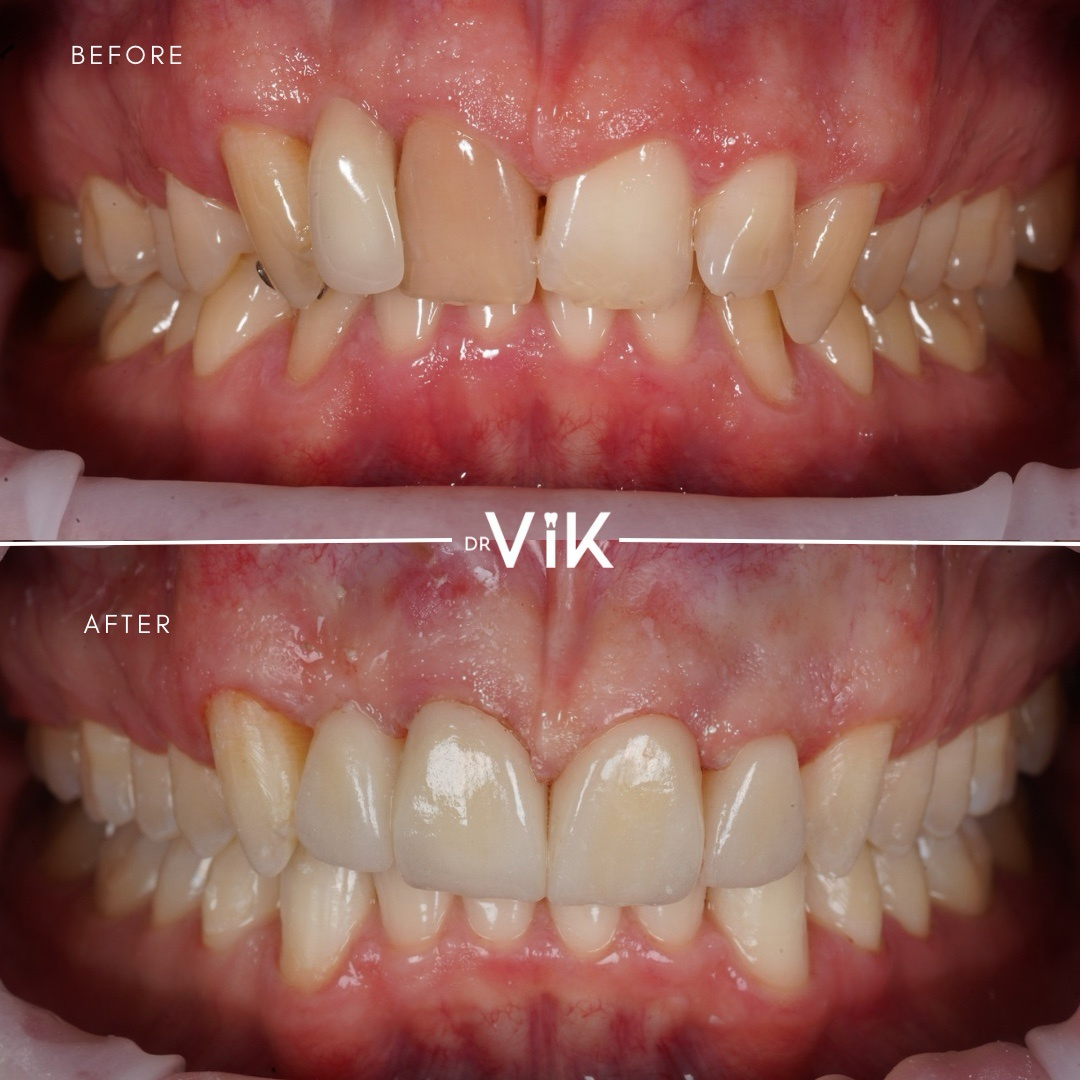
Porcelain veneers are thin custom-made shells bonded to the front of the teeth to improve colour, shape, size and overall smile balance. When they are the right option, they can create a dramatic change while still looking natural and elegant.
Veneers are often considered when straightening or whitening alone will not create the finish a patient wants. They can be useful for worn edges, shape discrepancies, deep staining or a more complete smile redesign.
What Are Veneers?
Veneers are bonded to the front surface of teeth to improve appearance. They are commonly used to change shape, cover discolouration, close small spaces, improve symmetry and refresh worn or uneven edges.
Veneers are most often used when the aim is cosmetic refinement across multiple dimensions, rather than simple straightening alone.
Healthy teeth and gums are important, and planning matters just as much as the veneers themselves. In some cases, Invisalign or bonding may be a better first step.
Benefits
The strongest appeal of porcelain veneers is that they can address multiple aesthetic concerns at once. When properly planned, they offer precision, consistency and a polished finish that can be difficult to achieve any other way.
Useful when teeth are stained, patchy or resistant to whitening and a more uniform shade is needed.
Can soften uneven edges, improve width-to-length proportions and create a more harmonious smile line.
Helpful when multiple front teeth need to be brought into visual balance at the same time.
The Process
Veneers should be approached as a staged process: consultation, smile design, preparation where needed, fabrication and final bonding. Good planning is what separates a natural result from an artificial one.
We discuss what you want to change, assess suitability and decide whether veneers are the right path or whether another option should come first.
Photos, scans and planning help define tooth shape, proportion and how the final result should sit with your face and bite.
Some cases need minimal preparation to create space and fit. The goal is always to stay as conservative as possible.
The veneers are bonded in place, checked carefully and reviewed so the final result feels balanced, comfortable and refined.
Suitability
If the main concerns are colour, shape, wear, proportion or a full smile redesign, veneers may be worth considering after a proper assessment.
In some cases, Invisalign, whitening or bonding may offer a more conservative route. Sometimes the best veneer case is the one that starts by not doing veneers immediately.
Common Questions
No, but they do require proper planning. Some cases involve minimal tooth preparation, while others need more reshaping depending on the desired outcome and tooth position.
The key is ensuring veneers are the right treatment for the situation. When placed appropriately, they protect and strengthen the tooth structure rather than weakening it. Dr. Vik will always discuss preparation levels clearly during the planning stage.
Porcelain veneers are designed to be durable and typically last 10 to 20 years or more with good care. Longevity depends on bite forces, oral habits, maintenance, and the health of the supporting teeth and gums.
They will eventually need replacing, but well-made porcelain holds its colour, shape and surface quality far longer than composite bonding alternatives.
Not automatically — they serve different purposes. Veneers offer more control over shape, translucency and colour for larger cosmetic changes. Bonding is more conservative and often better suited to smaller refinements.
The right choice depends on the starting point, the goal, and how much change is needed. Many patients benefit from a combination approach.
Porcelain is significantly more stain-resistant than both natural enamel and composite. The glazed surface repels most everyday staining from tea, coffee and red wine.
However, the margins where porcelain meets natural tooth, and the surrounding teeth themselves, still need regular care. Good hygiene and professional cleaning help keep everything looking consistent.
In some cases, yes. No-prep or minimal-prep veneers are possible when teeth are well-positioned and the changes needed are mostly additive — such as adding length or closing small gaps.
Most cases benefit from some level of preparation to achieve a natural thickness and avoid a bulky result. The amount of preparation is discussed during planning so you know exactly what to expect.
Most cases require two to three visits. The first involves planning and preparation, the second is for fitting. A trial smile stage may add an additional appointment.
Between visits, temporary veneers protect the prepared teeth while the final porcelain is crafted. Dr. Vik works closely with the ceramist throughout to ensure the result matches the plan.
Start with a consultation. We can look at whether veneers are the best route, or whether Invisalign, whitening or bonding should come first to get the most natural result.