Dental Implants with Dr. Vik

A permanent root. A complete tooth.

Dental implants replace a missing tooth from the root up. A titanium post is placed into the jawbone and, once healed, topped with a custom ceramic crown — creating something that looks, feels and functions like a natural tooth.

Permanent solution Crown-to-root replacement Long-term investment
Why patients choose implants

The closest thing to getting your own tooth back.

An implant is made of three simple parts: a titanium post that sits in the jawbone like a root, a small connector, and a custom ceramic crown on top. Once healed, it looks and feels like a natural tooth — and most patients forget it is there.

01
Permanent and fixedUnlike a denture, an implant stays in place. You brush it, eat with it and smile with it just like a natural tooth.
02
Protects what is already thereUnlike a bridge, an implant does not touch or rely on the neighbouring teeth. Everything around it stays untouched.
03
Keeps the jaw healthyThe titanium post fuses with the bone and keeps it stimulated — preventing the bone loss that normally follows a missing tooth.
95%+
Survival rate at 10 years
One of the most well-documented and reliable procedures in modern dentistry
25+
Years of expected fixture life
The titanium post is designed to be permanent — the crown may need replacing once over a lifetime
3–9
Months from placement to crown
Most of that time is the osseointegration phase — the implant quietly fusing with the bone

Which situation fits you?

Implants work differently depending on how many teeth are involved.

One or More Missing Teeth

Whether you're missing a single tooth or several, implants can replace each one individually or support a bridge

Full Mouth Replacement

All or most teeth need replacing — whether they're already missing or need to be removed first

Single Implant

One tooth missing. One implant. One crown.

The most common implant case. A single titanium post replaces the root, and a custom ceramic crown is fitted on top. It looks, feels and functions like the tooth that was there before.

Anatomy of an Implant

Four precision components. One natural-feeling tooth.

1

Crown

A custom ceramic restoration matched to the shade and shape of your natural teeth.

2

Abutment

Precision-machined connector that holds the crown securely and shapes the gum tissue.

3

Abutment Screw

A micro-fastener torqued to exact specification, locking everything together beneath the gum line.

4

Implant Fixture

The titanium root. Fuses with living bone over three to six months — a permanent anchor for life.

What to Expect

A straightforward experience, start to finish.

Placement day

Carried out under local anaesthetic. Most patients say it is less uncomfortable than having a tooth taken out. Usually under an hour, and you go home the same day.

The first week

Mild swelling and tenderness settles within a few days. Most patients manage with standard painkillers and soft foods, and are back to normal within two to three days.

The healing months

The quietest phase. The implant heals beneath the gum and you will not feel it. Life continues as normal until it is time for the final crown — usually three to six months.

The Process

Implants take time. That is what makes them permanent.

Each phase has a purpose. For most single implant cases, the full journey from assessment to final crown takes three to nine months.
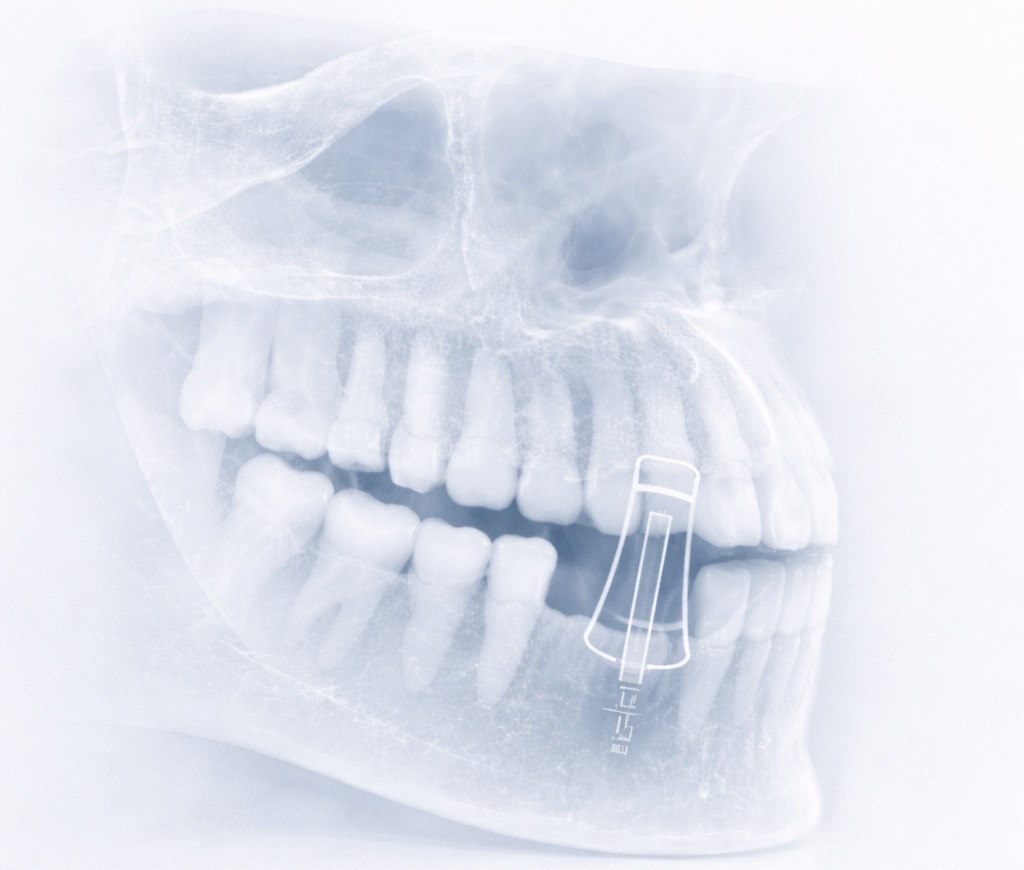
Assessment and planning stage
1
Week 0

Assessment and planning

A full assessment including X-rays or a CBCT scan to evaluate bone, nerves and sinuses. The plan is made here — not on the day of treatment.
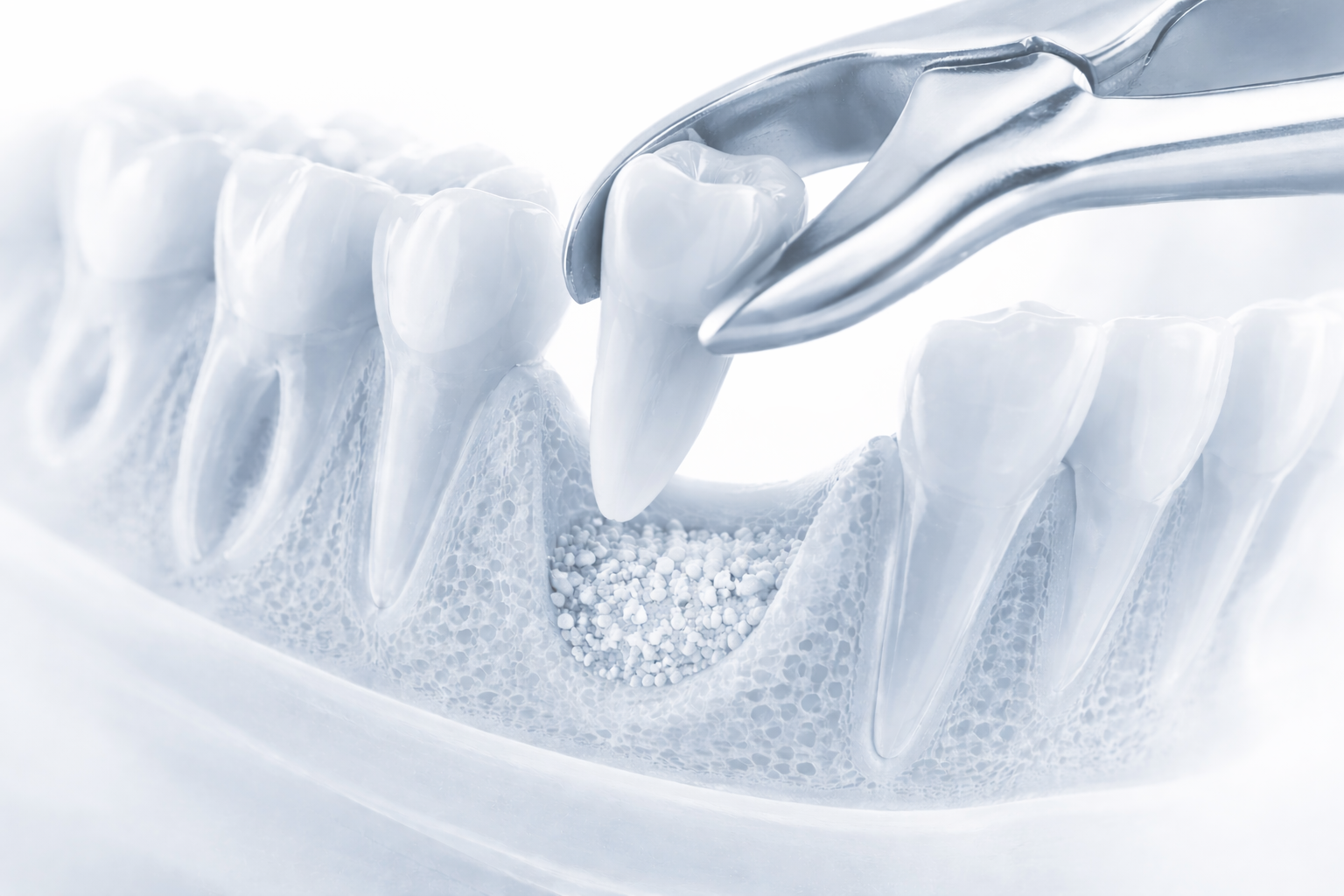
Tooth extraction from jawbone
2
Week 1–2

Extraction (if required)

If the tooth is still present, it is removed first. A bone graft may be placed at the same time to preserve the site.
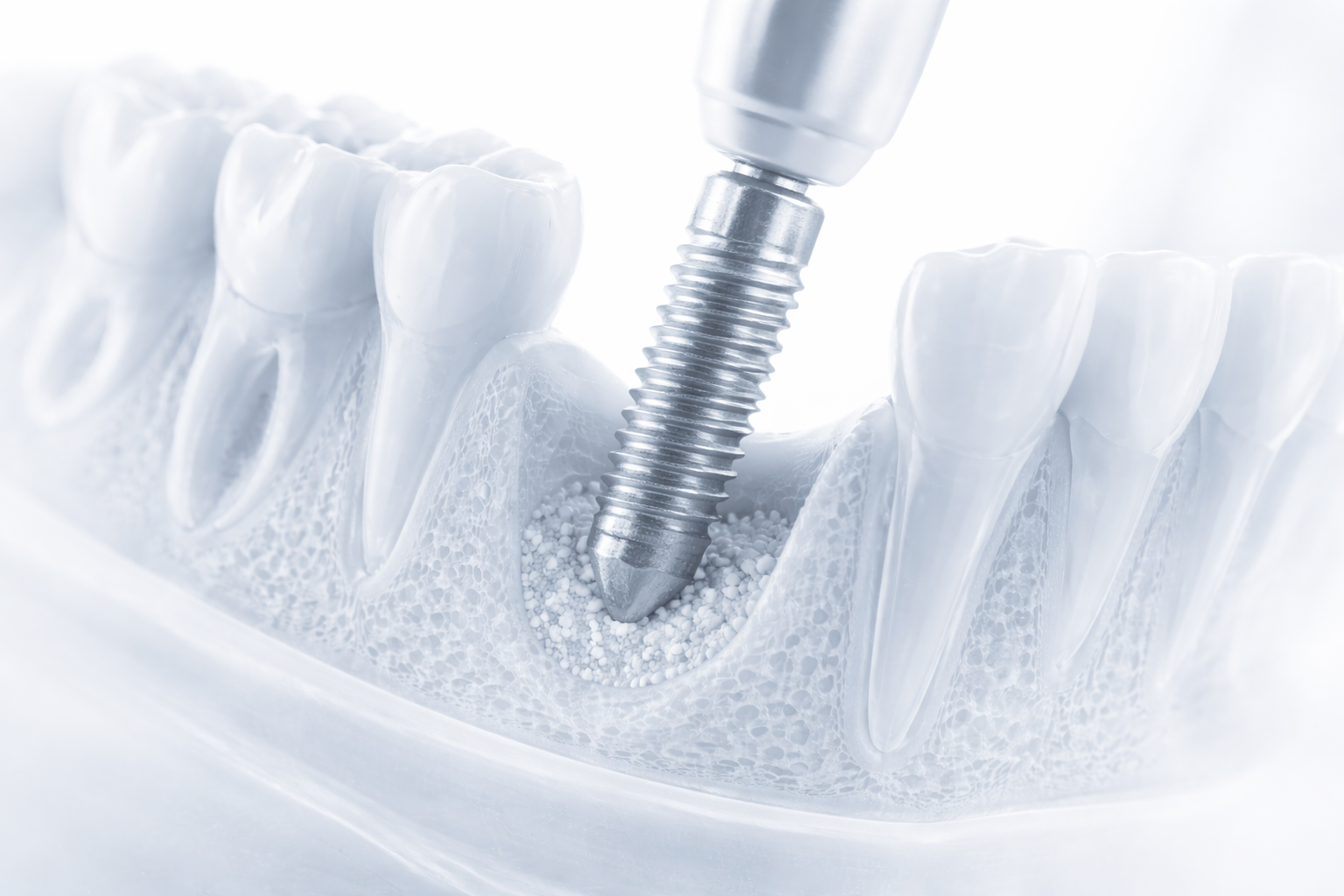
Implant fixture being placed into jawbone
3
Week 2–6

Implant placement

The titanium fixture is placed under local anaesthetic. Straightforward, and most patients describe it as easier than expected. The site then heals undisturbed.
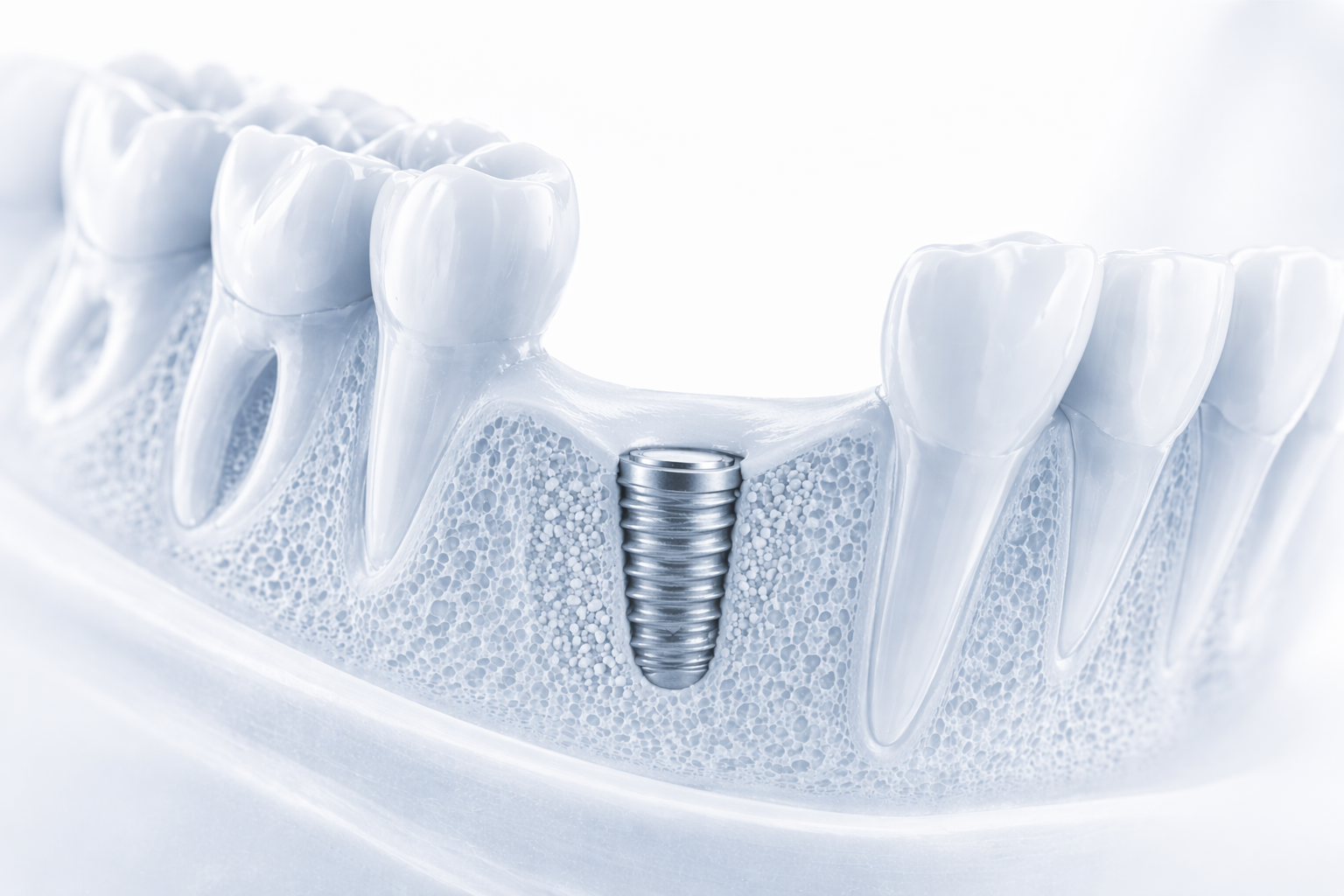
Implant fixture seated and integrating with bone
4
Month 1–6

Osseointegration

The post fuses with the bone over three to six months. This is the foundation of the implant's long-term strength. You attend occasional check-ups while life continues as normal.
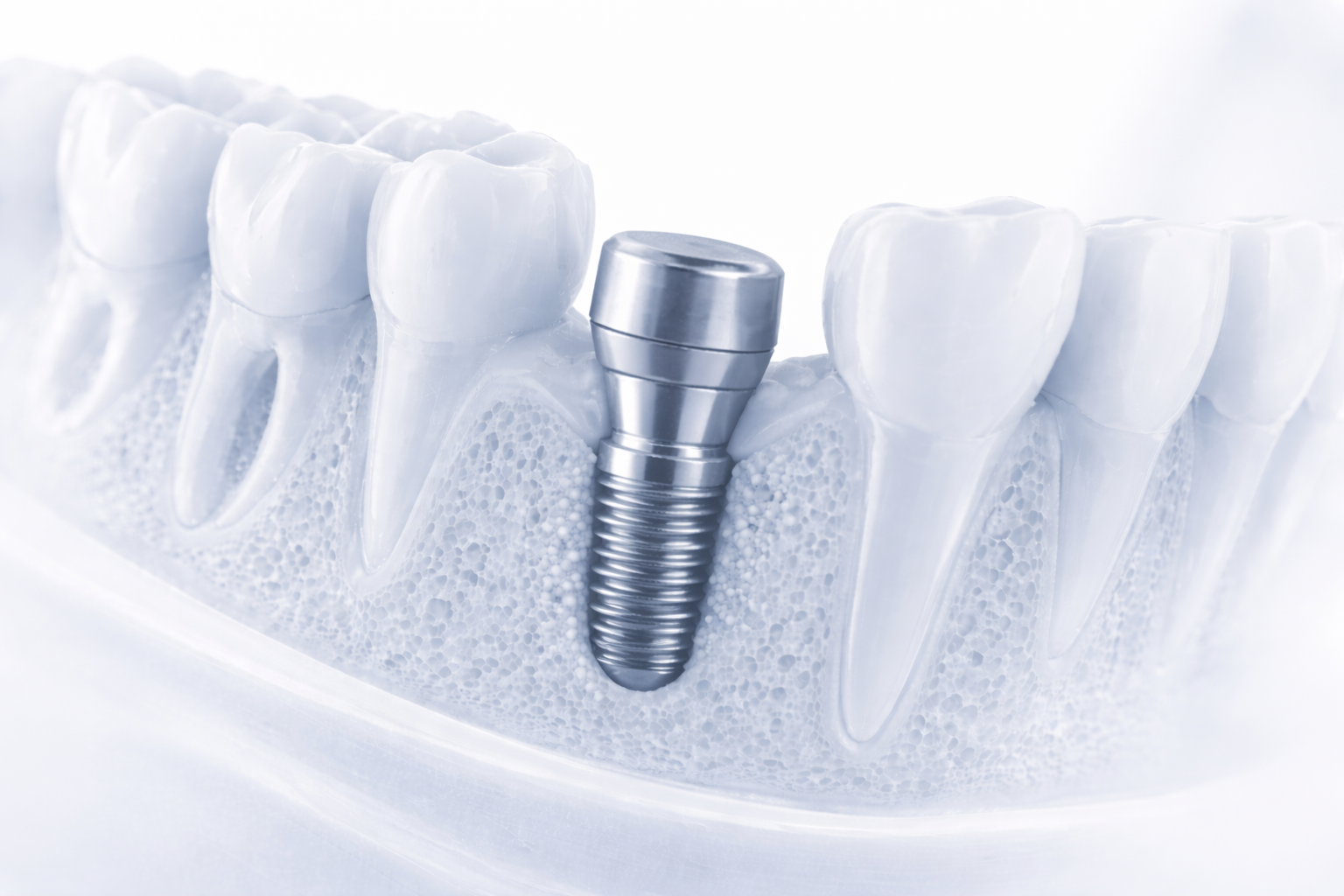
Abutment connector attached to implant
5
Month 4–7

Abutment and impressions

Once healed, the connector is attached and a scan is taken to design your final crown to the exact size, shape and shade.
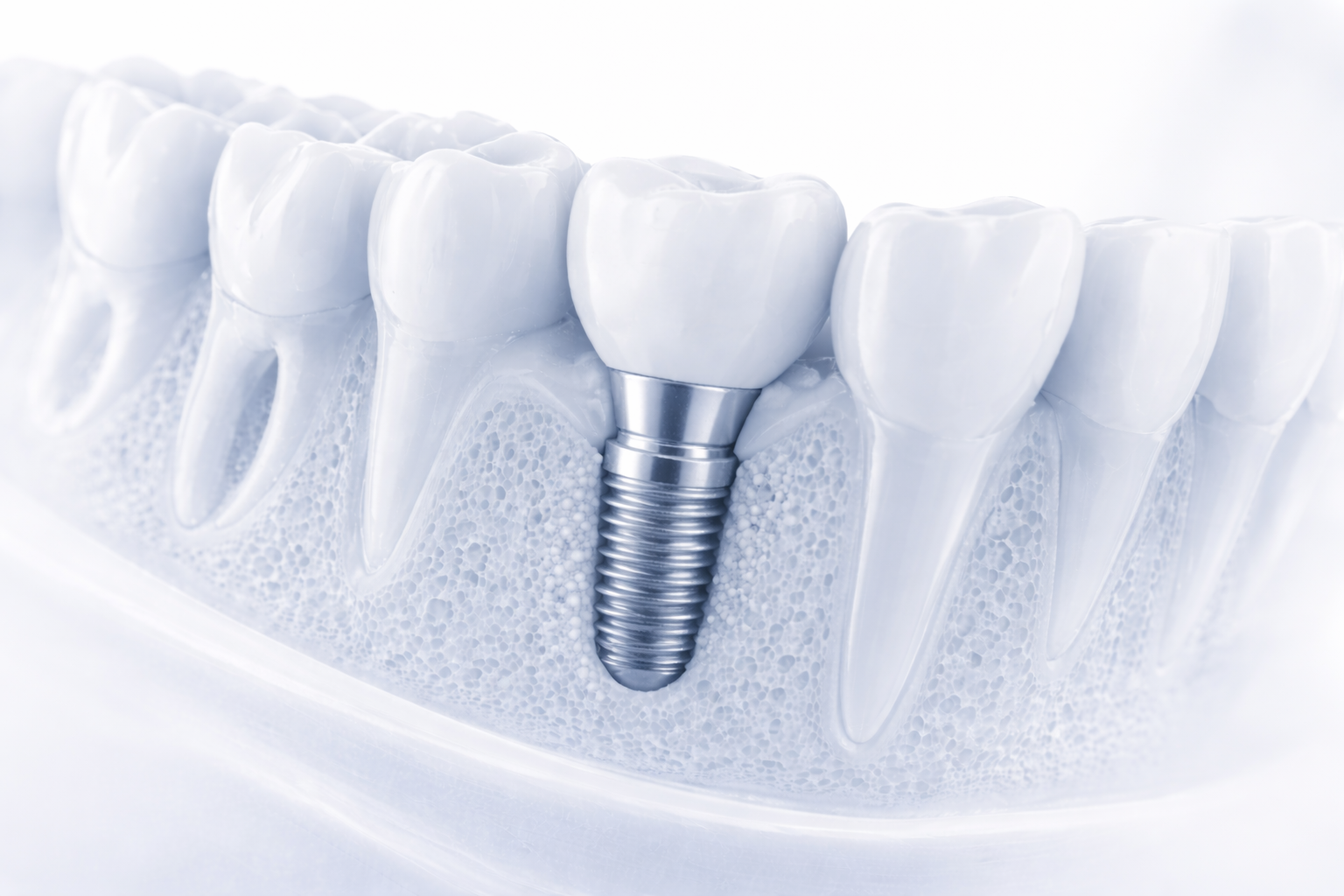
Final crown fitted onto implant
6
Month 5–9

Crown fitting

The custom ceramic crown is seated and checked for bite, contact and aesthetics. Once comfortable, the implant is complete.

Implant Bridge

Several teeth missing.
Fewer implants than you think.

When two or more adjacent teeth are missing, an implant-supported bridge uses just two posts to carry a full span — fewer implants, the same permanent result.
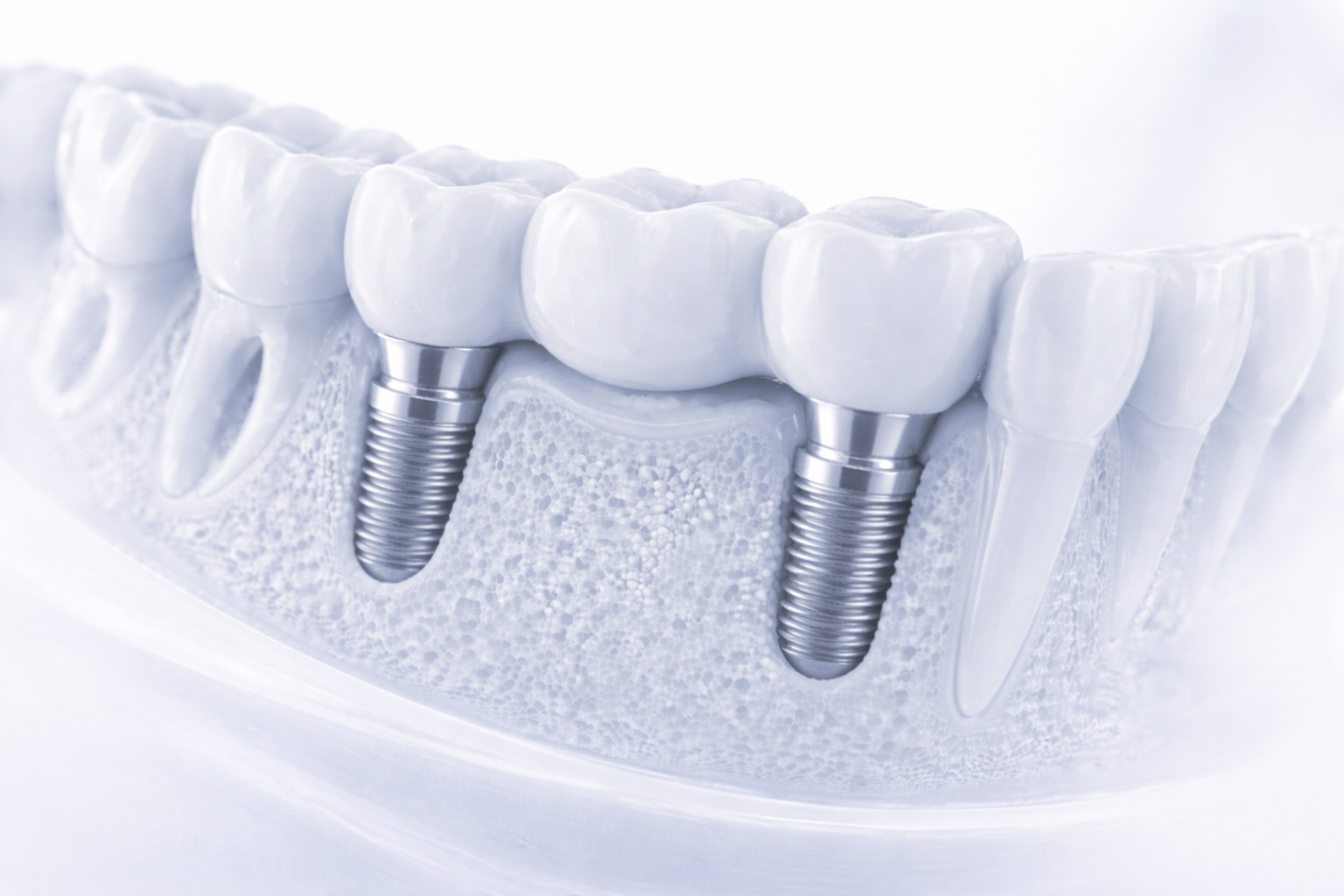
Implant-supported bridge spanning multiple teeth

How it works

Two implants. One seamless bridge.

1

Fewer implants needed

Two implants can typically support three to four teeth — you do not need one implant per missing tooth.

2

Fixed permanently

No clips, clasps or adhesive. The bridge is cemented onto the implants and stays in place like natural teeth.

3

Preserves bone

The implants stimulate the jawbone across the full span of the gap, preventing the bone loss that occurs with dentures.

When it is the right option

An implant bridge is often the best balance of fewer implants and a strong, permanent result. It avoids grinding down healthy neighbouring teeth and avoids the bulk of a partial denture.

Two or more adjacent teeth are missing
The gap is in a visible or load-bearing area
You want a fixed, permanent solution

The experience

Very similar to a single implant. Placement is carried out under local anaesthetic, healing takes three to six months, and the final bridge is fitted once the implants have integrated.

Four to nine months from assessment to final bridge
Same staged approach as a single implant
Brush and clean like natural teeth

Full Arch Implants

A complete smile.

Fixed for life.

Four to six implants supporting an entire arch of permanent teeth.

No dentures. No adhesive.
No compromise.

Teeth In A Day

A full smile in 48 hours.

Using digitally guided surgery, implants are placed and a fixed bridge is fitted in as little as two days.

Digitally Planned

Nothing left to guesswork.

Every case is planned using 3D imaging and surgical guides. Positions, angles and depths — mapped before treatment begins.

A Permanent Solution

Maintained like natural teeth.

No more removing dentures at night. No more adhesive. No more worrying about what you can and cannot eat.

Dr. Vik

Coming Soon

Register your interest and be the first to know.

Scroll to explore

Am I Suitable?

Most adults are good candidates.

The majority of patients with a missing tooth are suitable for an implant. A thorough assessment with scans will confirm whether you are ready to go ahead, or whether any straightforward preparation is needed first. Age alone is not a barrier — implants are placed successfully in patients of all ages.

What makes a good candidate

Healthy gums, adequate bone and stable general health are the main factors. Most patients meet these criteria, and a consultation with scans is the quickest way to confirm.

Good general oral health
Sufficient bone confirmed on imaging
No active gum disease or untreated infection

If anything needs addressing first

Some patients benefit from a preparatory step before the implant is placed. This is completely normal, does not rule out treatment, and is always discussed clearly during the consultation.

A bone graft to build up the site if needed
Gum treatment to create a healthy foundation
A medical review if relevant to healing

Looking After Your Implant

Simple to maintain. Built to last.

Once the crown is fitted, your implant is treated just like a natural tooth. The routine is straightforward — good daily care and regular check-ups are all it takes to keep everything healthy long-term.

Brush it like a normal tooth

Twice a day, just like the rest of your teeth. An interdental brush or water flosser around the base of the crown helps keep the gum tissue healthy and clean — it takes seconds.

Regular check-ups

Hygiene visits and implant reviews every six months keep everything on track. These are quick, routine appointments — a chance to check the gum, the crown and the bone around the implant.

A long-term investment

With good care, the implant itself can last a lifetime. The ceramic crown may eventually need refreshing after many years, but the foundation beneath it is designed to be permanent.

Common Questions

The things patients usually ask before starting treatment.

How long do dental implants last?

With proper care, the titanium fixture itself can last decades or even a lifetime. The ceramic crown on top may eventually need replacing — typically after 15 to 20 years — but the implant root is designed to be a permanent solution.

Longevity depends on oral hygiene, regular review appointments, smoking status, and the overall health of the bone and gum tissue around the implant. Patients who maintain good care routines generally see excellent long-term outcomes.

Is the implant procedure painful?

Placement is carried out under local anaesthetic and is more straightforward than most patients expect. Many describe it as easier than having a tooth extracted. Some soreness and mild swelling in the days following is normal and manageable with standard painkillers.

The healing phase is generally quiet and uneventful. If you are anxious about the procedure, sedation options can be discussed during your consultation.

How long does the whole process take?

From placement to final crown, most cases take between four and nine months. The majority of that time is the osseointegration phase — the period where the bone fuses with the implant and creates a stable foundation.

Preparatory work such as bone grafting or extraction can add further time at the beginning. Dr. Vik will give you a clear timeline during your consultation based on your specific situation.

Can I get an implant if I have had gum disease?

In many cases yes — but only once the gum disease has been properly treated and is stable. Active periodontal disease significantly increases the risk of implant failure, so it must be resolved before treatment begins.

Once stability is confirmed, implants can be a very successful option. Ongoing periodontal maintenance is essential to protect the implant long-term.

What is the difference between an implant and a bridge?

A bridge relies on the neighbouring teeth for support — they are cut down and crowned to anchor the replacement tooth. An implant is entirely independent: it replaces the root without touching adjacent teeth.

Implants preserve significantly more natural tooth structure and help maintain jawbone density in the area of the missing tooth. For most patients, they are the more conservative long-term solution.

Am I too old for a dental implant?

Age alone is not a barrier. Implants are placed successfully in patients well into their 70s and 80s. The deciding factors are bone quality, general health, and whether any medical conditions affect healing.

A thorough assessment with scans will determine whether you are a suitable candidate regardless of age.

What happens if an implant fails?

Implant failure is uncommon — success rates are consistently above 95%. When failure does occur, it is usually during the healing phase and often related to infection, smoking, or insufficient bone support.

If an implant does not integrate, it is removed painlessly and the site is allowed to heal. In most cases, a second implant can be placed once the area has recovered and the underlying cause has been addressed.

Thinking about an implant? The right place to start is a proper assessment.

Book a consultation to find out whether you are a suitable candidate, understand the timeline, and discuss what the process would involve for your specific situation.